 Diel
Diel

01
Build your baseline
The first days are about learning your patterns. Diel uses your own recent history as the reference point.
Diel turns signals from your Apple Watch and the things you do every day into a personal stress index. See how today compares with your own baseline - not someone else’s.
Built for iPhone and Apple Watch · Processing happens on your device
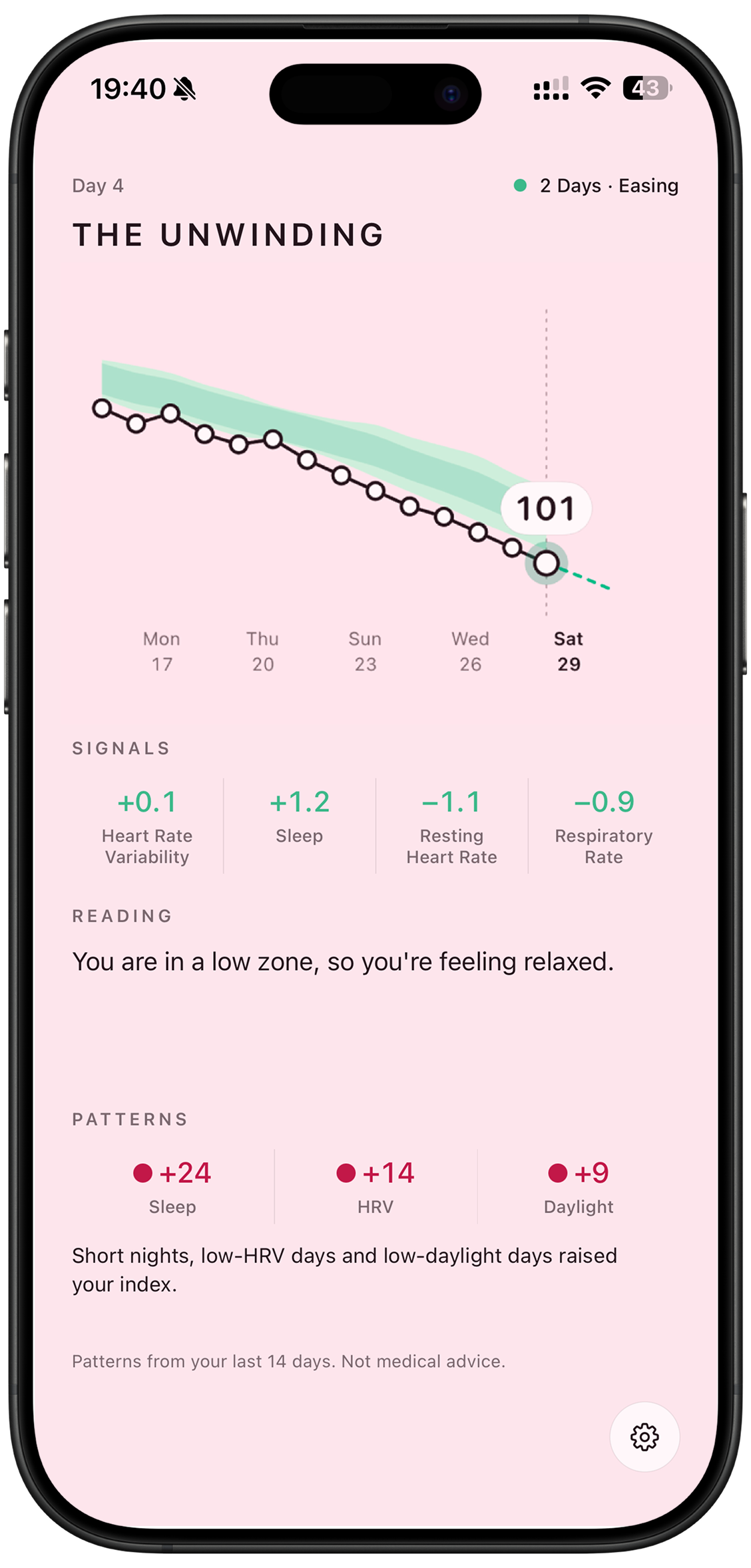
Diel learns your normal first, then helps you notice when your rhythm is shifting - and what might be behind it.
The first days are about learning your patterns. Diel uses your own recent history as the reference point.
Each day gets a relative index. Follow the trend instead of chasing an arbitrary “perfect” score.
Daily insights connect changes to sleep, movement, caffeine, alcohol, mood, and other context you choose to log.
Diel brings the useful pieces of Apple Health together, then puts them in context.
HRV, resting heart rate, heart rate recovery, and walking heart rate.
Sleep duration, stages, timing, and consistency across your recent days.
Exercise, active energy, daylight, respiratory rate, and wrist temperature.
Caffeine, alcohol, mood, perceived stress, and optional cycle signals.
Diel reads the health data you allow and computes your index on your device. No account is required, and your health records are never uploaded to our servers.
No. Diel does not measure cortisol or diagnose stress. It gives you a relative index based on signals associated with your own stress and recovery patterns.
Diel is designed around Apple Watch signals, so an Apple Watch gives you the fullest experience. It also uses context you enter yourself and other data already available in Apple Health.
Diel spends the first 7–14 days learning your normal range. During that time it collects enough history to make your index personal instead of generic.
Yes. If you choose the hormonal-cycle profile, Diel can use cycle information already logged in Apple Health to help distinguish a cycle-driven change from a stressful week.